
Local Tech & Search
What Regional Victoria Tourism Operators Need to Know About Google’s Latest Maps & AI Changes
Google is giving travellers more direct answers to detailed local questions. Here is what the change means for regional Victorian hospitality, tourism and food venues—and three practical improvements you can make today.
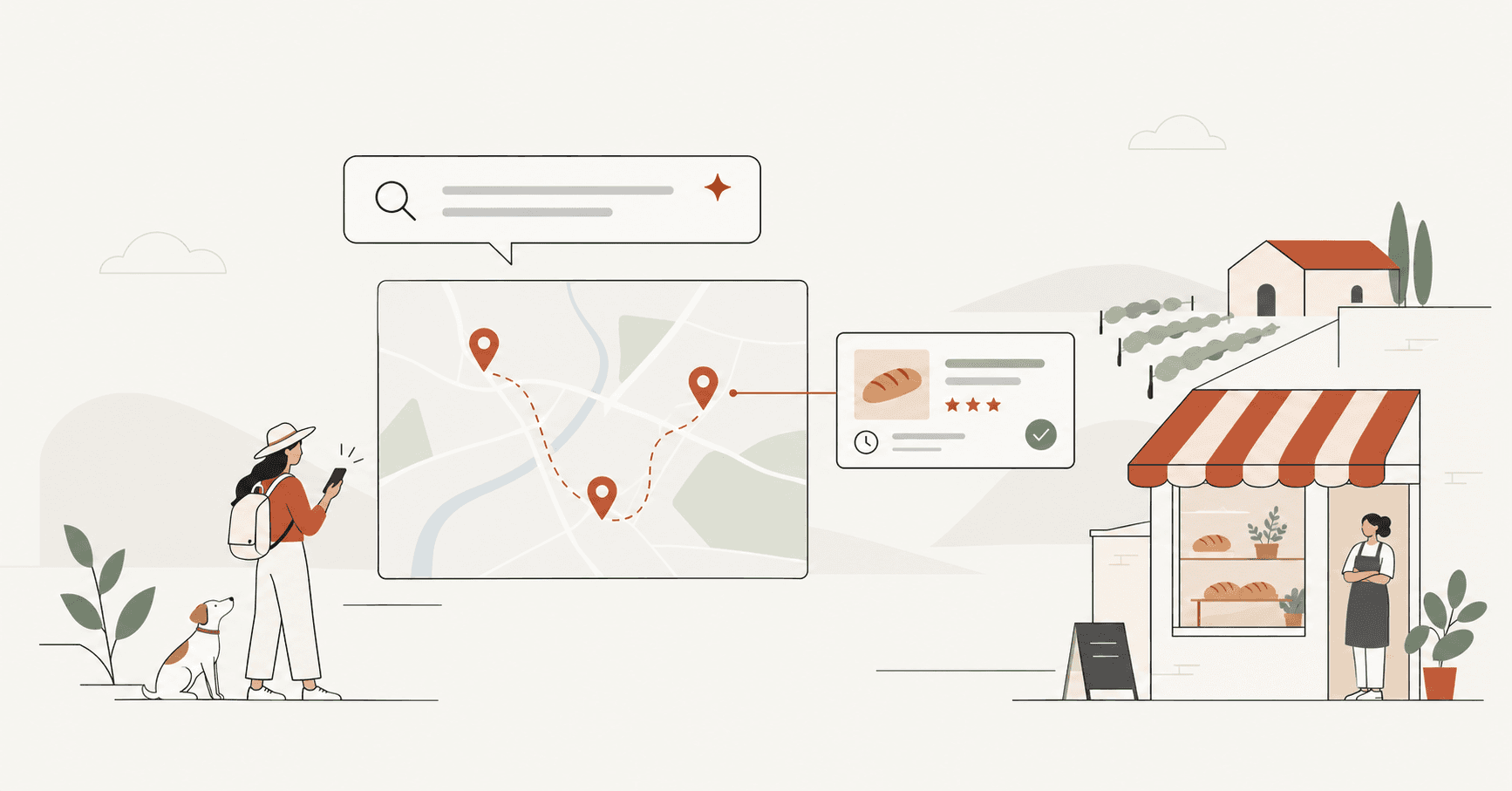
If someone is driving to Central Victoria for the weekend, they may not search Google the way they once did.
Instead of working through pages of web links or large local directories, travellers can open Google Maps or an AI-powered search experience on their phones and ask detailed questions such as:
Where is a dog-friendly winery open near Bendigo this Sunday with local platters?
Find me a bakery near Bendigo open past 3 pm with gluten-free options.
In August 2026, Google announced that Ask Maps was rolling out in Australia. The conversational Maps experience can answer complex questions, recommend places on a customised map and use current information such as opening hours, reviews and how busy a venue is.
Google Search's AI Mode can also present local place cards with ratings, reviews and opening hours alongside links for more detail. This means accurate, specific business information matters wherever a traveller encounters your venue—not only on a traditional search results page.
1. What changed in Google Maps and Search?
Google is using Gemini models with its existing information about places to answer more specific, conversational questions. The information available to these systems can include:
- Google Business Profile details: Opening hours, business categories, services and the attributes available for that type of venue.
- Customer reviews and Maps contributions: Genuine descriptions of menu items, parking, accessibility, local produce and the visitor experience.
- Clear website information: Useful pages and FAQs that state what the business offers, where it is and what visitors need to know.
This does not mean every query produces a fixed number of recommendations or that one update guarantees visibility. It does mean that vague or inconsistent business information gives Google and prospective visitors less to work with than clear, current facts.
2. Why regional hospitality and food businesses are affected
Regional tourism operators depend heavily on intent-based visitors—people who are already travelling, planning a weekend or deciding where to eat and what to do nearby.
- The margin problem: When direct visibility is weak, accommodation and tourism operators can become more dependent on online travel agents or directory platforms that charge commission fees.
- The selection problem: Conversational search often presents a focused set of places that appear to match the question. A business with incomplete hours, categories or visitor information may be less useful to the person making that decision.
- The timing problem: Regional businesses often change hours around seasons, public holidays and local events. Out-of-date information can send a visitor elsewhere even when the venue would otherwise suit them.
3. Three simple steps you can take today
You do not need a large marketing budget or a complete website redesign to improve the information people can find. Start with these three areas.
Step 1: Review your Google Business Profile
Google recommends keeping Business Profile information accurate and current, including business hours and categories.
- Available attributes: Review the attributes Google provides for your business category and region. Add only those that accurately describe the venue, such as outdoor seating, accessibility or service options.
- Opening hours: Check regular, seasonal and public-holiday hours. Accommodation providers should follow Google's specific guidance about which hours are appropriate for their profile type.
- Core category: Choose the most specific category that represents the main business rather than adding categories as keywords.
Step 2: Put clear FAQs on your website
Add a short FAQ section to an appropriate page and answer the questions visitors genuinely ask. Use plain language and keep the details consistent with your Business Profile.
- Do you offer gluten-free options? — “Yes, we offer gluten-free bakery items prepared fresh daily.”
- Is parking available for caravans or large cars? — “Yes, we have a gravel car park with space for caravans.”
Only publish answers that are true for your business, and update them when the service changes.
Step 3: Make it easy to leave an honest review
Invite satisfied visitors to leave a genuine review in their own words. Do not script the review or offer incentives for particular wording.
Specific, truthful details—such as a dish they enjoyed, the local wine selection, helpful accessibility information or the service they received—can be useful to future visitors reading reviews and to Maps experiences that summarise contributor insights.
Frequently asked questions
Do I need to rebuild my website for AI search?
Not necessarily. Begin by making the operational details on your existing website and Google Business Profile clear, accurate and consistent. A rebuild may be useful for other reasons, but it is not the first requirement for improving this information.
What is the difference between traditional SEO and AI search visibility?
Traditional SEO often focuses on helping a page rank for searches such as “Castlemaine cafe”. AI-assisted search can interpret longer, more specific questions such as “Which cafe in Castlemaine has outdoor seating and allows dogs?”
The foundations overlap: accurate business information, useful website content, relevant local context and a good visitor experience all matter. Terms such as AEO or GEO describe ways of making information easier for answer engines and generative systems to understand, but they do not replace those foundations.
Need help improving your online visibility?
Ritualy Digital Consulting helps regional Victorian venues, local food producers and tourism businesses improve online visibility without unnecessary technical complexity.
Talk through your business's online visibility with Guri, and we can help identify a practical first step.
What would you like to make easier?
Tell us where work gets stuck. We’ll help you choose a practical first step.